I'm excited to be able to give you the link to this FREE ebook that…
what does dirt taste like?

A young autistic person recently told me about an experience they had at school.
Them: I had a bad day because my friend told people something I didn’t want them to tell.
Me: Oh? Can you tell me about it?
Them: I don’t want to. You’ll make fun of me.
Me: I don’t make fun of people.
Them: You’ll laugh.
Me: I won’t laugh.
Them: Do you promise you won’t laugh?
Me: I promise.
Them: I licked dirt.
Me: Yeah? What did it taste like?
Them: Salty
Me: I’ve wondered about that. I wasn’t brave enough to try it though. Snot from your nose tastes a bit salty too. It’s got a bit of dirt in it.
Them: …. surprised pause ….
Me: Did you lick it because you wanted to know what it tasted like?
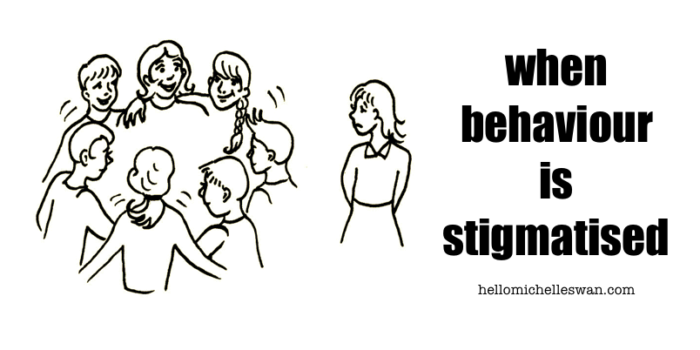
Them: Yeah. But when I told my friend they laughed. And then they told other kids and they laughed. One of them came up to me and gave me a present that was a hand full of dirt to tease me. And when we got back to the classroom my friend told the teacher and the teacher laughed.
Me: …. unsurprised pause …. that must have felt pretty awful for you ….
Them: …. yeah ….
The conversation went on.
I explained that sometimes people laugh when they are surprised.
I explained that sometimes people don’t know when to keep information private.
I explained that sometimes we have to be careful who we share information with if we want it to stay private.
I explained that even though it doesn’t always make sense what people will find weird or not, that sometimes people will find things weird.
We talked about how we eat things that grow in dirt. But most people think it’s unusual to taste dirt.
We talked about how even though we eat carrot skin and potato skin, eating a tree skin isn’t considered okay, though essentially it is all bark.
We talked about how eating grass isn’t okay, but eating lettuce is.
We talked about how in some places eating dandelions is okay but others think it’s weird.
We talked about how important it is not to let the expectations and limitations others place on themselves define who we are and who we want to become.
We talked abut kindness. How sharing information given by someone in order to make others laugh isn’t okay. Especially if the purpose is to laugh at someone.
We talked about how sometimes we want people to laugh at things we do and say, like when we tell a joke. But sometimes we don’t want them to laugh because the thing they are laughing about is a vulnerability or sensitivity. And sometimes other people can’t tell the difference unless we explicitly state it.
And we talked about how it’s pretty common that our intended communication is not always the communication that others receive, and that we can misunderstand others meanings too. We discussed asking for clarification instead of assuming intent.
And all this discussion, about things that many, many children just learn by exposure to a range of social situations, was necessary because this child is autistic and has a diagnosed language processing disability that impacts their capacity to understand implication, hidden meaning, and nuance.
The same childs NAPLAN scores were off the chart high in literacy skills. Literally off the chart. Higher than the scale allows to record off the chart.
A “high functioning” child.
Who licked dirt to see what it tasted like, and didn’t understand why people made fun of them.
And all I can think about now that our conversation is over is this:
Just because an autistic person doesn’t do what most people expect doesn’t mean they are doing something inappropriate.
Unexpected, uncommon, and atypical are not synonymous with inappropriate.
To me, both the dirt licking and the teasing are expected. I know which one I consider to be more inappropriate, and it’s not the dirt licking.

This article is featured exclusively at hellomichelleswan.com.
The content of this article is the intellectual property of Michelle Swan, and is copyright.
Permission to reproduce this article, in part or in whole, can be sought by emailing contact@hellomichelleswan.com
click here to read full disclaimer, attributions and acknowledgements page (opens in a new tab)

Related Posts