Tips for Teachers: The sensory friendly classroom

Supporting a neurodivergent students sensory needs is the first thing I recommend no matter what challenges they may appear to be facing in the classroom. This graphic presents some suggestions for where to start in creating a more sensory friendly classroom.
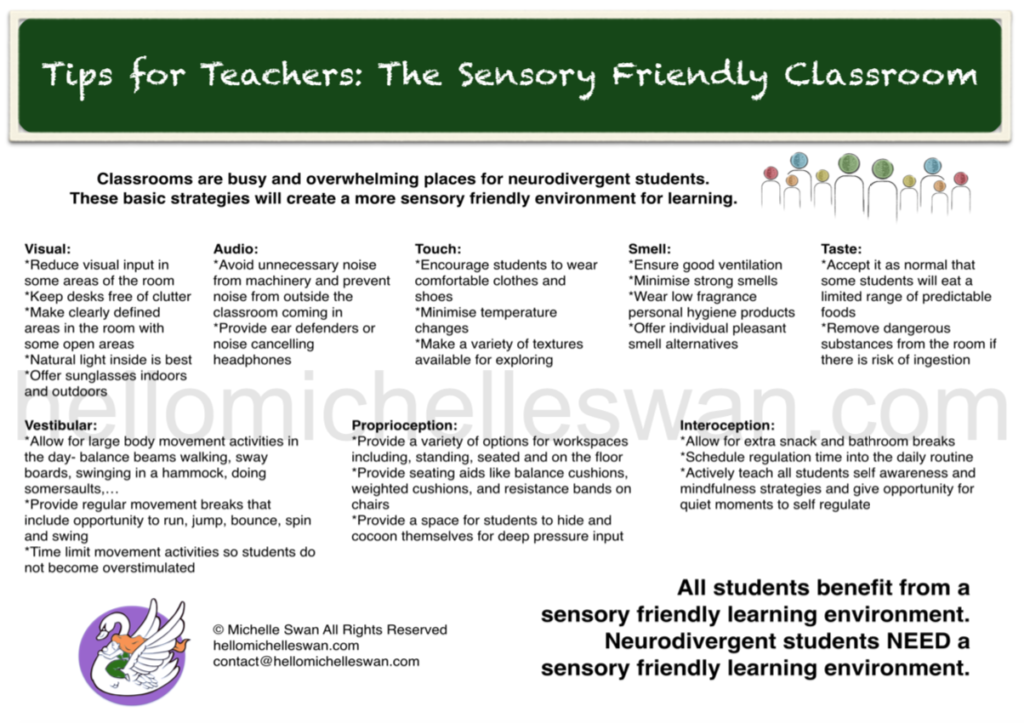
Image title: Tips for Teachers: The Sensory Friendly Classroom
Subheading: Classrooms are busy and overwhelming places for neurodivergent students.
These basic strategies will create a more sensory friendly environment for learning.
Visual:
*Reduce visual input in some areas of the room
*Keep desks free of clutter
*Make clearly defined areas in the room with some open areas
*Natural light inside is best
*Offer sunglasses indoors and outdoors
Audio:
*Avoid unnecessary noise from machinery and prevent noise from outside the classroom coming in
*Provide ear defenders or noise cancelling headphones
Touch:
*Encourage students to wear comfortable clothes and shoes
*Minimise temperature changes
*Make a variety of textures available for exploring
Smell:
*Ensure good ventilation
*Minimise strong smells
*Wear low fragrance personal hygiene products
*Offer individual pleasant smell alternatives
Taste:
*Accept it as normal that some students will eat a limited range of predictable foods
*Remove dangerous substances from the room if there is risk of ingestion
Vestibular:
*Allow for large body movement activities in the day- balance beams walking, sway boards, swinging in a hammock, doing somersaults,…
*Provide regular movement breaks that include opportunity to run, jump, bounce, spin and swing
*Time limit movement activities so students do not become overstimulated
Proprioception:
*Provide a variety of options for workspaces including, standing, seated and on the floor
*Provide seating aids like balance cushions, weighted cushions, and resistance bands on chairs
*Provide a space for students to hide and cocoon themselves for deep pressure input
Interoception:
*Allow for extra snack and bathroom breaks
*Schedule regulation time into the daily routine
*Actively teach all students self awareness and mindfulness strategies and give opportunity for quiet moments to self regulate
All students benefit from a sensory friendly learning environment.
Neurodivergent students NEED a sensory friendly learning environment.
On the image(s) in this article the following copyright information is printed beside a logo that shows a purple circle behind a flying white swan that has a orange haired person wearing green clothes sitting on its back:
©Michelle Swan All Rights Reserved
hellomichelleswan.com contact@hellomichelleswan

Related Posts